J.D. Vance addressing world leaders at the AI Action Summit on Feb. 11, 2025And I think too many of the leaders in the AI industry -- when they talk about this fear of replacing workers, I think they really miss the point. AI, we believe, is going to make us more productive, more prosperous, and more free.
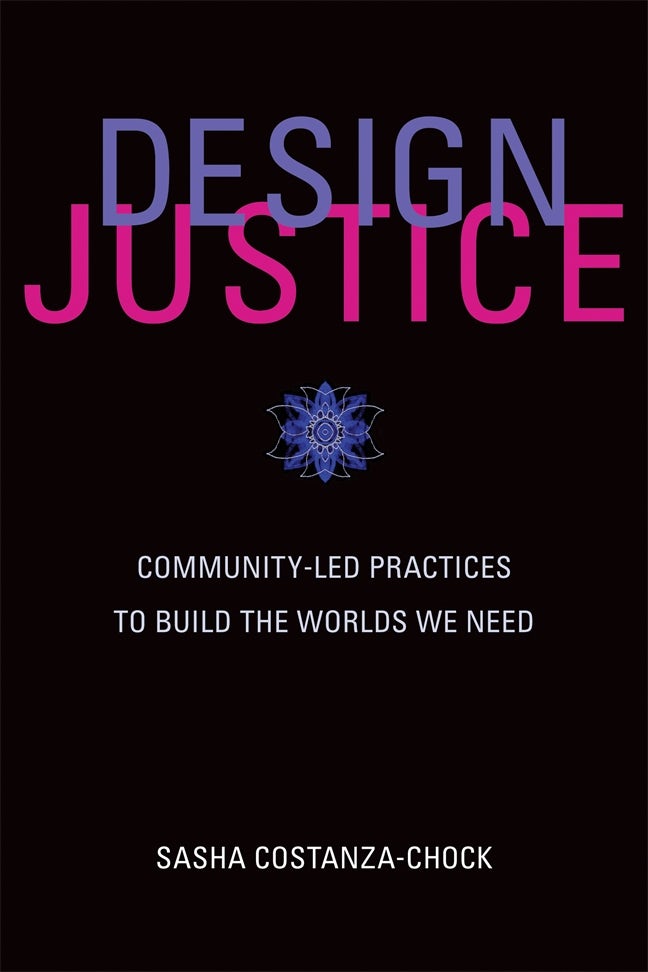
In winter term, Sarah Lohnes Watulak and Amy Collier teach a class for Middlebury undergraduates called Questioning Technology. This class, inspired by initiatives like Civics of Tech and Design Justice, and scholars Meredith Broussard (whose More Than A Glitch is the course’s primary textbook), Ruha Benjamin, Kate Crawford, and others–encourages students to turn a critical lens toward technology and the stories that we are told about technology. As it turns out, this opportunity to ask questions about the technologies and surrounding stories that are deeply embedded in their lives, is met with some degree of trepidation and resistance by some of the students. This makes sense. Their whole lives, technology has been framed as progress, as improvement, as connection, as power. Silicon Valley = innovation and innovation = benefit. This course calls into question our acceptance of techno inevitability and techno chauvinism. It encourages students to look beyond marketing (the stories, the hype) and conveniences to consider deeper questions: Who benefits from this technology? Who is harmed? What values are encoded in its design? What alternatives might we imagine?
We center the course around several texts, one of which is a transcript of a talk given by Neil Postman in 1998 called 5 Things We Need to Know About Technological Change. In the talk, given to the New Tech Conference, “a crash course in the digital revolution” for Catholic leaders, Postman shared 5 key ideas:
- “We always pay a price for technology; the greater the technology, the greater the price.
- There are always winners and losers, and that the winners always try to persuade the losers that they are really winners.
- There is embedded in every great technology an epistemological, political or social prejudice.
- Technological change is not additive; it is ecological, which means, it changes everything and is, therefore, too important to be left entirely in the hands of Bill Gates.
- Technology tends to become mythic; that is, perceived as part of the natural order of things, and therefore tends to control more of our lives than is good for us.”

There is a lot to unpack in Postman’s talk but, for the purpose of this final article in our series, we want to focus on the ways in which it pushes us to engage with the tradeoffs related to any new (or expanding) technology. His is not a call to outrightly reject technology but to assess what is gained and lost, who wins and who loses, and how uncritical embracing of technology gives it more power than is due.
His talk also highlights an important point – technology is not neutral. We are told over and over that technology is neutral and that harms only happen when we misapply technology with harmful intent. But technology is not neutral. It emerges from particular cultural contexts, carries specific values, and serves certain interests over others. Design choices embedded in technology – from what data is collected to how interfaces are structured to what features are prioritized – reflect and reinforce particular ways of seeing and organizing the world. When we treat technology as neutral, we ignore these choices and their consequences.
Consider, for example, how AI systems are trained on data that reflects historical biases, how social media platforms optimize for engagement over understanding, or how facial recognition systems perform better on some demographic groups than others. These aren’t just technical limitations to be solved, but manifestations of deeper social and political choices about what matters and who counts. Left unchecked, technological innovations will exacerbate inequality, will benefit a few at the expense of many, will decimate and pollute natural resources.

The stories we’re told about technology–and specifically AI–are intended to disempower us from action. To remove our sense of agency and responsibility. Joseph Weizenbaum wrote: The myth of technological and political and social inevitability is a powerful tranquilizer of the conscience. Its service is to remove responsibility from the shoulders of everyone who truly believes it.” We’ve been told that AI is inevitable. It’s progress. It’s desirable. Get on board or get out of the way. But, as Professor Alondra Nelson bravely said at the Paris AI Action Summit last week (the very one where Vice President JD Vance gave closing remarks trumpeting AI):
“It is not inevitable that AI will lead to great public benefits. The outcomes many of us hope for, or anticipate, are not inherent features of the technology itself. They are not coded into algorithms, or embedded in neural networks. The good that may come from AI, in science and education, in healthcare and in the economy, must be actively stewarded through leadership and true innovation – innovation that is fundamentally responsible and human-centered.
These benefits will not emerge only from the invisible hand of market dynamics. They must be cultivated in partnership with civil society and with our democratic institutions. And most critically, AI in the public interest demands the meaningful involvement of the very people whose lives could be transformed by these technologies.”
Middlebury, as an educational institution in service of our civil society, our work isn’t merely to teach students about AI or to help them feel work-ready in an AI-enabled world. Our job is to help students develop the critical frameworks and ethical foundations they need to question, shape, and when necessary, resist AI (and any other technology). To demand consideration of the tradeoffs we make and what we undermine and undercut when we embrace AI. And to look for the possibilities if/where AI might provide benefit, with special attention toward a more equal distribution of benefit than is typical with most technologies. We believe that this mission requires meaningful engagement with AI but through careful and considered exploration.
In participating in this Detox, you are taking part in one portion of Middlebury’s effort toward “nurturing independent and reliable knowledge ecosystems that feed into AI literacy and realistic public understanding of AI.” Internal to Middlebury, we (DLINQ) continue to hold workshops to help faculty, staff, and students gain the knowledge and experience necessary to make their own choices around AI. We are in our second round of faculty AI-exploration grants which enable course- and discipline-specific considerations of AI. These semester-long interactions enable faculty and students to have safe(r) and guided engagements with AI that provide the experience needed to establish personal and professional views on how AI impacts learning. Across Middlebury’s courses, faculty set specific rules and provide rationale about how AI can and can’t be used through syllabi statements. In addition to more individualized AI development, Middlebury is engaged in communal conversations about AI and its role in a liberal arts education. We continue to bring in outside expertise (e.g., author John Warner, author of More Than Words: How to Think About Writing in the Age of AI, is speaking at Middlebury on March 11) to help shape our explorations, and to push our criticality and reflection.
AI is a tool, but it’s also a mirror, reflecting back deep societal questions and unresolved problems. It forces us to confront issues that have long been brewing beneath the surface:
- What does it mean to be human? AI can simulate creativity, cognition, and even emotion. But as the results blur, we must ask: What truly makes us human? What do we value about our own intelligence, what are we willing to outsource and at what cost? When we create a society where we turn to AI to care for both our parents and our children, what does that mean?
- What are the ecological costs? AI requires a considerable amount of resources compared to other digital technologies while also using only a small percentage of our total energy and water expenditures. As AI is integrated into more areas of our life (often without our consent), what environmental toll are we willing to accept? How do these issues point to larger problems in infrastructure, in planning, in understanding how we use energy and other resources?
- How do we think about the ownership of knowledge and ideas? AI complicates traditional notions of authorship and ownership. Who benefits when creative work is scraped, repackaged, and automated? How do we protect the voices and labor of those who generate new knowledge and art? Do we protect the intellectual property of individuals the same way we protect the ideas owned by corporations? How do we balance the idea of a vibrant cultural commons and making a living?
- Are we repeating past mistakes? History shows that we often adopt new technologies without understanding their repercussions—social media, plastics, antibiotics, pesticides, etc. AI presents a similar challenge: will we let it shape our world without questioning who it serves and at whose expense?
We hope this experience has helped you start taking a more active and informed role in how AI impacts your life and has contributed language, experiences, and resources to make your voice heard.