Digital Teaching & LearningFellows
2025-2026 Fellows
Digital Teaching & Learning Fellows 2025-2026 Cohort
Read on to find out more about the projects of the current cohort.
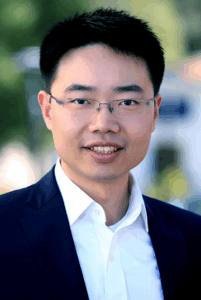
Charles Cai
What project will you be working on?
The project can be described as “a self-directed study companion for interpretation students” to support students’ self-directed interpretation practice. I envision the project to include the latest tools for note-taking, knowledge management, and speech-to-text recognition, as well as an asynchronous digital learning module that introduces interpretation students early on to a system for managing their interpretation practice.
What impact(s) do you hope your project will have on student learning?
Benefits for the students may include: self-awareness, interdisciplinary thinking, productivity, and better emotional wellbeing by reducing frustration through better awareness of progress as well as challenges, easier planning and execution of future learning activities, and easier goal setting and tracking.

Dr. Catherine Combelles
What project will you be working on?
The proposed project has 3 parts: (i) implement a digital showcase of ProjectRepro products created by students in BIOL0450; (ii) map out and build the ReproPathways website- in at least its skeletal form with its first pages and initial functional features; and (iii) implement a modified version of the ProjectRepro assignment to allow BIOL0450 students to engage with the ReproPathways community and have a lasting impact beyond Middlebury.
What impact(s) do you hope your project will have on student learning?
In completing the ProjectRepro assignment, students will get to interact with an actual target audience, directly help support a cause, and become named contributors to ReproPathways. They will also get to network, practice life/career skills, and even work with professionals in the field. Students will be invested and engaged in the project, to help provide deep and meaningful learning and help increase motivation. As they work on an outward-facing project, they will work on research and communication skills, align materials with the target audience, and acquire or hone digital tools (e.g. use of digital storytelling with multimedia and judicious use of AI tools).

Dr. Jonathan Miller-Lane
What project will you be working on?
In Ed Psych II: Learning in Community, students will be constructing a digital story map of the community in which they will be completing their student teaching. In this process they, too, will be learning skills they can apply to their own grade level and content area while coming to know where they are.
What impact(s) do you hope your project will have on student learning?
I believe our students would benefit greatly by engaging such an approach to understanding this community and developing a deeper understanding of how the students they are working with actually interact with this community.

Dr. Danielle Simon
What project will you be working on?
My Introduction to Music course, with 45-50 students, has historically faced limitations in project-based learning due to its size. Music, at its essence, is both a listening and creative practice. Yet in large music history classes, we often default to lecture-based formats that emphasize reading and analysis while minimizing creation and collaboration. I envision a project that asks students to develop collaborative digital soundscapes, in which students can collectively compose and respond to each other’s work, and perhaps create platforms for asynchronous musical dialogues that transcend the physical limitations of our classroom.
What impact(s) do you hope your project will have on student learning?
By having students first produce their own audio compositions and then apply their analytical listening skills to their peers’ work, I anticipate that this project will create a symbiotic relationship between creation and critical listening. Also, when I’ve taught podcasting assignments in the past, I’ve found that the peer editing and interaction component dramatically enhances student engagement. Beyond these immediate course objectives, introducing students to digital audio workspaces and basic audio editing tools would provide valuable transferable skills.

Dr. David Wick
What project will you be working on?
I want to examine and refine the course “IEMG 8525: Social Issues, Justice, and Change in Education” so that not just the content, but also the form and the engagement with technology, fully demonstrate Intercultural and social justice competencies we guide our students to develop. After exploring models and possibilities and designing refinements during the fall portion of the fellowship in the spring I will focus on building new content modules and re-designing the culminating assignment for the class, the pedagogical project.
What impact(s) do you hope your project will have on student learning?
I expect that students in the refined version of IEMG 8525 will be able to:
– List digital learning approaches that foster inclusion, intercultural engagement, and social justice.
– Evaluate digital sources for final projects and practice a variety of approaches to teaching new content with digital technologies.
– Reflect on digital learning’s potential and parameters for advancing social justice and change in education.
– Create pedagogical projects with optimal digital formats to reflect the content and competencies of the class and model practices for accessibility.