Bill Gates - billionaire co-founder of Microsoft (still sensitive about Clippy)Clippy was a bot, not an agent.
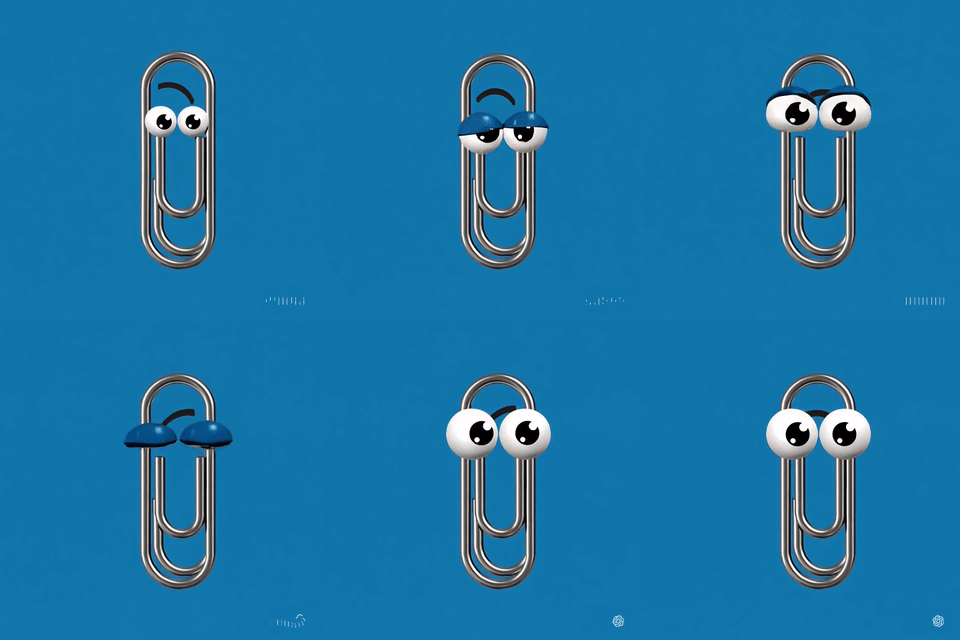
Bill Gates - billionaire co-founder of Microsoft (still sensitive about Clippy)Clippy was a bot, not an agent.
In the last article we looked at AI’s influence on work. In this article, we’re going to see how AI is impacting your home and personal life.
Some experts contend that, within 10 years, 40% of domestic work could be automated by AI. The idea of magical helpers who take on the annoying day-to-day tasks has been something people have wanted. It’s interesting to see various forms popping with examples like Talos (an early version of Robocop ~300 BCE), The Elves and the Shoemakers (1812) , and even a smart home raising kids back in 1950 (Ray Bradbury’s The Veldt). Growing up, many of us coveted The Jetsons’ Rosie the Robot, who served as a housekeeper and caretaker for the Jetson’s children. Kids today grew up wanting their own version of Tony Stark’s J.A.R.V.I.S (Just a Rather Very Intelligent System).
The foundation necessary for AI assistants has been building for quite some time. Home devices are increasingly “smart,” connected to the Internet, and they increasingly gather and share data about us (with cars being particularly grievous offenders). While the integration of AI into daily life has been going on for years, it is picking up speed as more and more items have computers, sensors, and become enmeshed in the Internet of Things (IoT).
How AI personal assistants fit into our lives is a big question. Another question might be, will there be room for AI personal assistants in our already-crowded digitally-entwined lives? Many people already have automatic vacuum cleaners (mapping their houses). Through an assortment of hardware and software, we have machines that decipher our voice to play music, set timers, make lists and turn the lights off and on (The Clapper is still for sale by the way.). We have AI thermostats that automatically adjust the temperature, sense occupancy, and incorporate weather reports. Doorbells that recognize motion and record video (participation in police surveillance nets is now optional). Phones are voice-to-texting, text-to-voicing, reminding, auto-completing, auto-replying, location tracking, proximity alerting . . . bills are paid, grass is watered, purchases are made . . . TVs optimize our viewing, refrigerators order food, determine if food is safe to eat, and suggest recipes. Maybe you’ve seen the AI family hub™ where your Samsung refrigerator comes with wifi, bluetooth, a 32” screen, and AI Vision Inside™. A refrigerator that promises to connect your phone, Google Photos, calendar, Alexa, and can control all your other smart appliances.
Even with all of these AI devices in our lives, we’re told that AI assistants will usher in new and exciting options that will further improve everything. What’s behind the drive for AI assistants/agents? In Pressed for Time: The Acceleration of Life in Digital Capitalism, Judy Wajcman writes that the push to automate personal and domestic tasks stems not from a genuine time scarcity, but from cultural anxieties about time and productivity in modern life. Despite the narratives pushing automation in pursuit of more “leisure time,” the need for automation emerges from changing expectations about how time should be used and an increasing pressure to optimize every moment. As Jenny Odell argues in How To Do Nothing: Resisting the Attention Economy, the relentless drive to maximize productivity reflects a market logic that sees any unfilled moment as wasted–a mindset that leaves us unable to value activities that don’t produce measurable outputs. The push for AI automation thus represents not just a technical solution but an extension of “the attention economy” into our most intimate spaces, promising to optimize even our domestic lives for maximum efficiency.
We have good reasons to be concerned about both the claims being made about how AI might automate our personal and home lives, and what tradeoffs we might make in the pursuit of those claims. When we reflect on how social media and algorithms have influenced our decisions, our connections with others, and our social systems using a (relatively) limited set of data and interaction patterns, we have to wonder what the impacts will be with personal AI agents. Personal AI agents will have the possibility to interact and influence us in ways we can’t yet imagine. Companies that make these personal agents will have a strong fiduciary motive to use that influence to not just to shape our purchases, but to modify our behavior, to impact how we vote and, ultimately, what and how we think.
Every screen becomes a private algorithmic theater, projecting a reality crafted to be maximally compelling to an audience of one.

While Amazon pioneered online shopping, the COVID-19 pandemic further shifted consumer habits toward real-time, same-day delivery services like Instacart and DoorDash. These human-powered services (where, not coincidentally, humans are treated like robots) set the stage for the AI assistants we’re now being promised. Currently, you have to pick ingredients, or at least select a recipe and a person selects the items at the store, and, mostly, a person delivers them. But the move to automate all of those elements is in full swing. You can see how your refrigerator would use a camera in partnership with as a service somewhere between Instacart™ and HelloFresh™ to have a Zipline™ drone drop off your ingredients.
Instacart’s evolution– such as integrating ads and personalized recommendations–provides a glimpse into how the AI agent ecosystem might unfold. The automation of our personal and home tasks raises significant concerns related to our privacy and data security. Historically, Americans have been willing to trade privacy for small rewards: loyalty-program discounts, free wifi at businesses, or lower insurance premiums (health or automobile). These exchanges involved mostly one-way data flow (from users to corporations), and manipulation was typically limited to advertising and curated search results.
AI agents, however, introduce a new dimension: personas. These digital entities, designed to interact with, and earn trust from, users, are already appearing in social media, in various tools, in increasing numbers of websites. Rufus is the AI that will optimize your Amazon shopping. Promises are being made. Your daughter’s car will know her so well that simply driving her car will improve your relationship. Imagine a brand-aligned AI “nanny” that helps raise you, tells you bedtime stories, answers your questions, plans your meals, offers psychological counseling. Would people still critically evaluate its recommendations– be it advice on peanut butter brands or how you should vote in the next election? Could we even perceive how often we are influenced?
We can also look at how the promises of automation for personal or work tasks have historically led to unequal benefits for men and women (and across other groups with differing levels of privilege and power). Scholars like Ruth Schwartz Conan, author of More Work for Mother: The Ironies of Household Technologies from the Open Hearth to the Microwave, point out that machines and automation don’t lead to more freedom and opportunity for women–they lead to higher expectations and unrealistic standards placed on women. Writing about how household machines changed expectations for women’s work in the home after World War II, Schwartz Conan wrote, “After the war, housework changed: it was no longer a trial and a chore, but something quite different-an emotional ‘trip.’ Laundering was not just laundering, but an expression of love; the housewife who truly loved her family would protect them from the embarrassment of tattletale gray. Feeding the family was not just feeding the family, but a way to express the housewife’s artistic inclinations and a way to encourage feelings of family loyalty and affection…Women who failed at these new household tasks were bound to feel guilt about their failure.” Housework was not a job, certainly not a shared job. It was a calling and calling that became separated from the way these jobs had been done in the past.
For an early 20th century housewife, the way her mother did things was not necessarily a good guideline to follow. She needed help to navigate all the new tech and all the latest trends, and much like today there was an army of experts and advertisers to tell her what to do. Also much like today it was often very difficult to tell the experts and the advertisers apart.
The promises of AI automation highlight the value (or lack of value) placed on certain forms of unpaid labor (which we also saw in the research on automation of paid labor). For example, in the study of experts’ views of household automation, which resulted in the proclamation that 40% of domestic work could be automated by AI by 2030, the researchers “found male and female experts had different expectations about automation of domestic work, potentially reflecting the differences in their lived experiences with technology as well as their involvement in housework and care work.” Much of our economic structure in the US is built on this invisible and undervalued labor but, rather than contending with those dynamics, the push to automate them with further obscure and commoditize them (see Silvia Federici’s work on this, highlighted in a 2021 New York Times Magazine article).
Find a current advertisement for an AI-powered home, car, refrigerator, toothbrush, or personal assistant (e.g. Josh, Samsung Family Hub, Mercedes, Oral B). Watch the ad or explore its promotional materials.
Feel free to focus on what you hope AI agents might do or focus on what you are worried about.
What specific tasks or benefits does the ad say the AI assistant can provide?
How does it claim to make your life easier, more efficient, or more enjoyable?
What types of personal data would this assistant likely need to perform these tasks (e.g., location, preferences, purchasing habits)?
Does the ad mention privacy or data security? If not, what concerns might you have?
What are the potential benefits of this assistant (e.g., saved time, convenience)?
What are the possible costs (e.g., loss of privacy, increased dependency, susceptibility to manipulation)?
Use the button below to submit your review.