Elon MuskAI is the most powerful tool for creativity that has ever been created.
Elon MuskAI is the most powerful tool for creativity that has ever been created.
In last year’s Detox, when we wrote about generative AI and art, we noted both the uneven quality of image and video generation and the increasing sophistication of image and video generation tools. Since then, the image and video generation has improved markedly and the thorny issues related to AI-generated art have gotten…well, thornier. More than 20 major lawsuits are being pursued against AI companies for copyright infringement. Adobe’s Firefly was promoted as the ethical choice for AI image creation because it only trained on works that Adobe had license to use. It was then found to have used Midjourney images in its training data. Coke came out with an AI-generated commercial that met with fairly negative reviews. The winning photo in an AI photo contest was disqualified for being a real photo. The Concept Art Association’s Go Fund Me raised more than $285,000 to protect artists from AI technologies. $187,500 of that went to pay for a full-time D.C. lobbyist. Meanwhile, the United Nations hosted an AI artwork installation entitled Large Nature Model: Coral. This “testament to the beauty and fragility of our natural world” was “trained on a staggering 100 million coral reef images.” No mention was made of the energy required to train this model. It is an understatement to say we are living in very odd times.
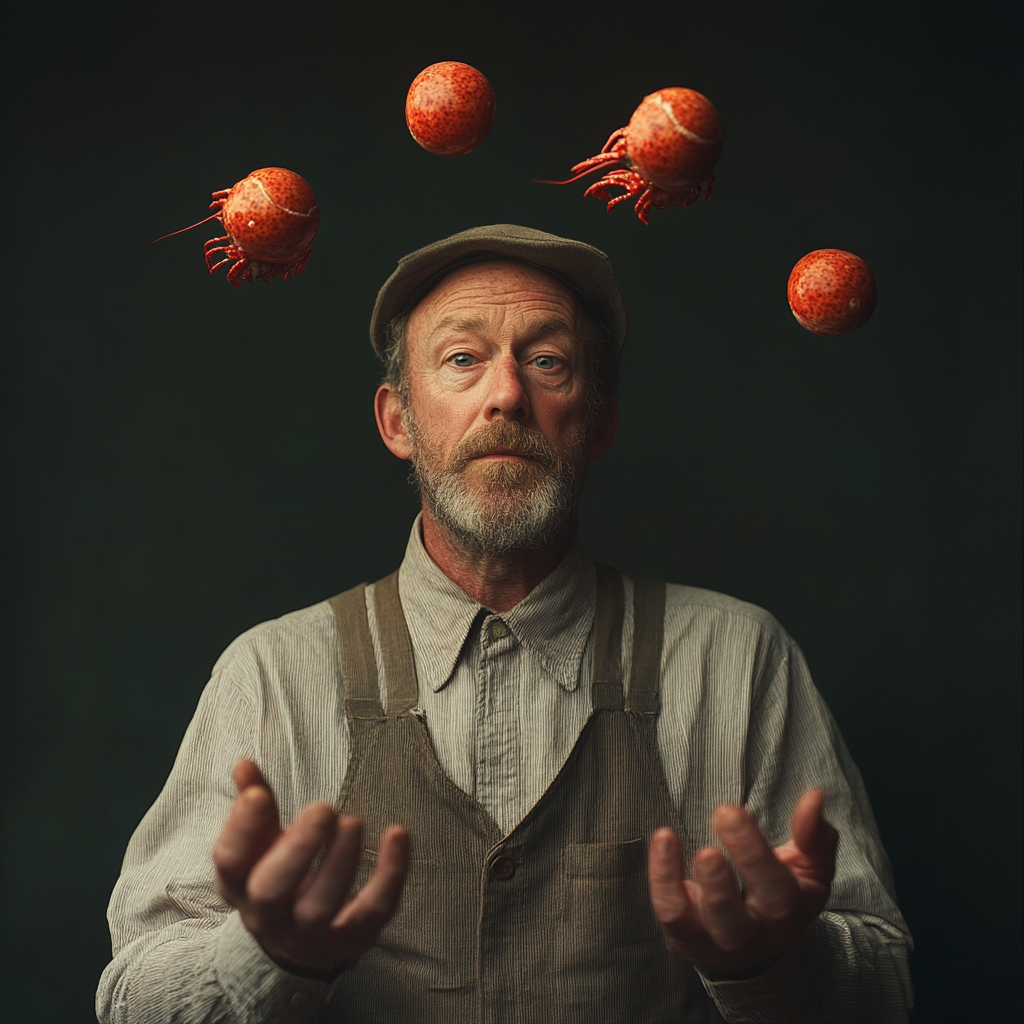
Using words to create media is a fascinating experience – it feels a bit like writing a magic spell. Whether those words are making a song about Canterbury Tales in Middle English, an image of a man juggling what are supposed to be lobsters (right), or a macro video of a fly’s eye, you can understand the excitement that these tools generate. Lowering the barriers to creating media is attractive to many who have creative ideas but don’t have the skills to express them in a particular way. Whether these examples represent art or are merely media is subjective.
Below is a compilation of videos we created in a few minutes, using Sora (ChatGPT’s video creation tool). Our goal was to create drone-style footage of Middlebury, Vermont. The output is both amazing and frustrating. So much of art is in the details and the control the artist is able to express (except when it’s about randomization). In this case, our prompt evolved as we figured out what Sora was able to act on. The initial prompt is on the left and, after several evolutions, the final prompt is on the right. The footage improved but is still a long way from what we envisioned. The details feel just out of reach.
| Original
Create drone footage of a camera flying down Otter Creek and through the middle of town in Middlebury, Vermont. It’s winter and snowing lightly. |
Modified
Create footage of a drone slowly flying along a creek with rocks and small rapids. The creek leads through a small New England town with an old Federal-style white church with black shutters. The steeple has a clock. There is a quaint downtown with some small shops. The buildings are some distance from the creek banks. Gray birch trees predominate. It’s winter and snowing lightly. The roads are plowed. No cars are visible. |
These tools are so new that it can be hard to tell when the failure is in the technology (AI video creation doesn’t work!), a specific tool (Sora doesn’t work!), or the author’s skill in using a specific tool (I don’t know Sora well enough to make it work!). In this case, it’s likely a combination of all three. AI video creation works but there is still a long way to go. We’re also using a pretty basic tool that has only recently been made available–more advanced and specialized tools (see also, higher cost) are likely able to produce higher-quality work. But, even with a basic tool, it’s pretty amazing what you can create. It also raises so many questions.
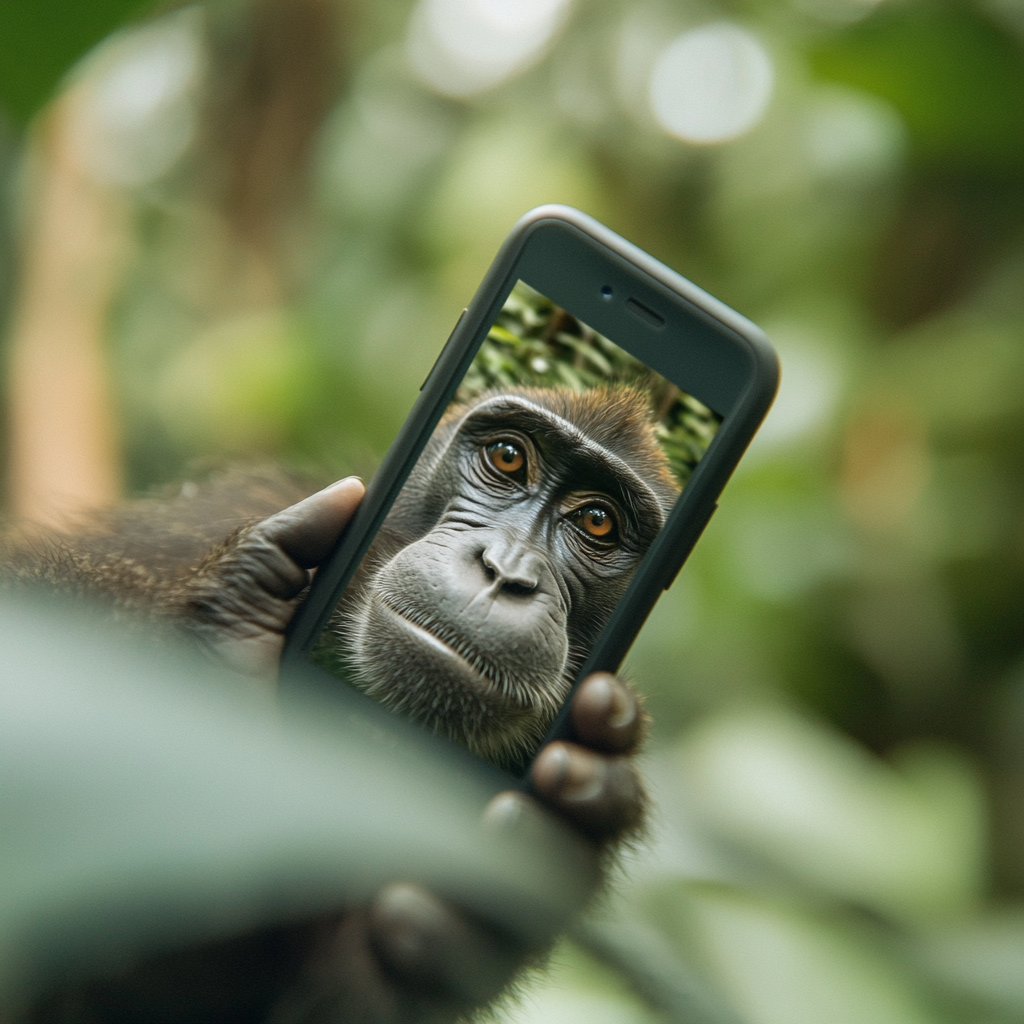
At the root of any analysis of AI and art are fundamental questions that are much bigger than AI.
Clearly we can’t provide answers to these huge questions. These are, after all, questions where the answers evolve with our society and technology and where many people hold differing views. You may already disagree with existing communal (and legal) answers. What we can do is explore examples and questions that will help you situate your own opinions with greater clarity (or at least create a more interesting state of confusion).
At the heart of many concerns surrounding AI is the issue of intellectual property rights– specifically, the rights of individuals whose work is included in training datasets. Even if courts rule that transforming images, sounds, videos and other creative works into mathematical weights is legally permissible, the ethical question remains: Is it right?
Some AI tools, like Adobe Firefly, claim to use ethically sourced training data. Others, like Mickey-1928, operate in a gray area by fine-tuning an existing model (Stable-Diffusion-xl) on public domain content (stills from the earliest depictions of Mickey Mouse). In response to complexity like this, Fairly Trained is now offering certifications that verify AI models were trained ethically and specifying what that means. Their list of certified models and tools is growing. On the other end of the process, The Dataset Providers Alliance, is creating a system to let content owners control if, and get paid when, their content is used to train AI models.
Many AI models can now mimic specific artistic styles with alarming precision. Using an artist’s own work to generate imitations– especially while corporations profit massively–feels fundamentally unjust. This raises serious concerns about consent, attribution, and fair compensation. Current copyright law was not designed with AI in mind and new precedents will need to be established.
Where AI merely assists an author in the creative process, its use does not change the copyrightability of the output. At the other extreme, if content is entirely generated by AI, it cannot be protected by copyright. Between these boundaries, various forms and combinations of human contributions can be involved in producing AI outputs.
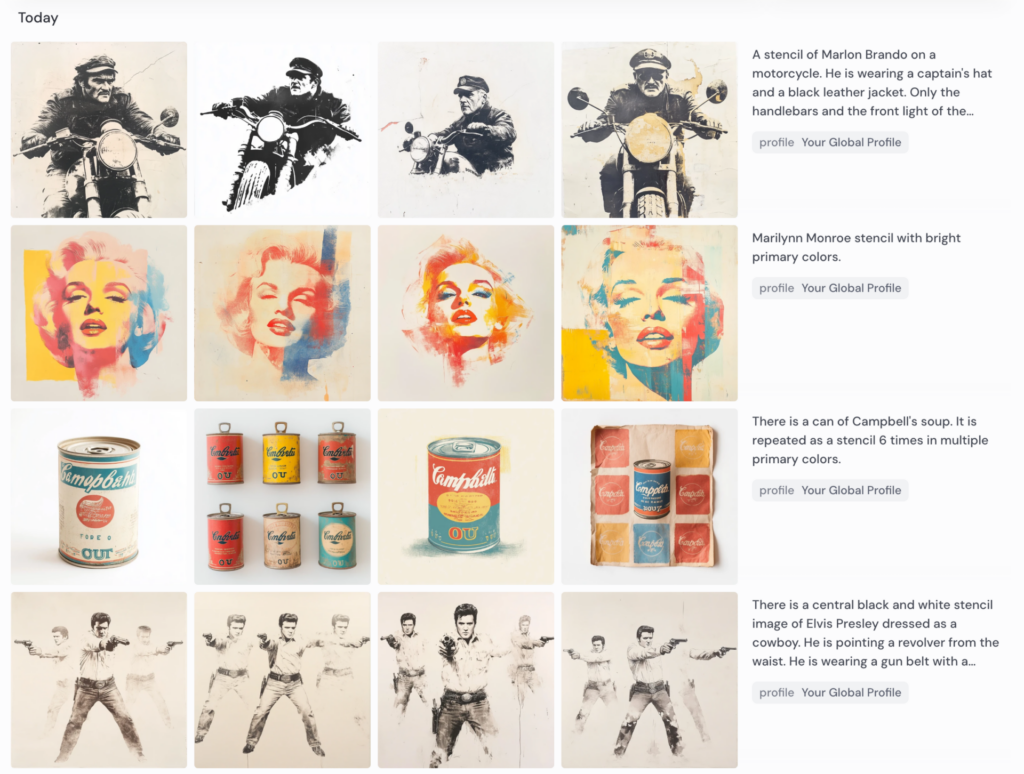
When considering AI’s role in the creative process, it’s important to recognize that it is a process and one in which AI can serve very different functions. AI might only be used for brainstorming, or to create reference photos for more traditional work, or to create minor elements of larger work, etc. etc. If I paint an AI-generated image of a chef juggling lobsters, where am I on the creativity spectrum? In what way does this differ from Andy Warhol’s soup cans?
MidJourney (an AI image generation tool) has an entire section dedicated to paintovers (defined as significant edits of AI-generated images). At what point, if any, in the editing process does an AI-initiated image change enough to become a person’s artistic creation? Observing an “AI artist” move from an initial sketch, to AI prompts, to finished product over the course of 17 hours shows just how complex this process can be. It requires skill, knowledge of tools, and the ability to navigate between tools for specific purposes.
The role of technology in art has always been a bit fraught. With singers, you might question the role of autotune. With photography, strong opinions abound about post-processing (in the dark room or digitally). Now we have other things to opine about, like whether using AI to turn your voice into an instrument counts as playing an instrument?
That “strong reaction against AI art” is no joke. Studies (like this one) have found that humans consistently rate works of art more negatively when they believe that the works are AI-generated. Interestingly, when participants did not know the origin of the art they often rated AI-generated pieces as favorably or even more favorably than human-made pieces. This bias against AI-generated art appeared strongest when participants evaluated factors like monetary value and artistic talent, but was less pronounced for qualities like emotional impact or aesthetic appeal. In other words, people seemed more hesitant to pay for or acknowledge technical proficiency of AI-generated art, but they seemed more open to appreciating its emotional or aesthetic value. Unsurprisingly, exposure to AI art may enhance how people view human creativity–when comparing AI and human-created works side by side, people tended to rate human creativity more highly. These reactions echo long-running debates about authenticity and technology in art, from the introduction of photography, to Andy Warhol’s The Factory, to today’s digital editing tools. The question isn’t just whether AI can make art, but how our perception of art changes when we think machines are involved in its creation. Those perceptions of AI-generated art may have serious implications for what role AI-generated art can play in our world. As we saw with the AI-generated Coke advertisement fiasco, if our reactions to AI-generated content are adverse, we may miss out on messages because of how they were created. Lim and Schmälze’s study demonstrated this risk directly–people were more likely to dismiss potentially valuable health information if they knew AI had written it, even when the content was high quality. This suggests our bias against AI-generated content could prevent us from benefiting from otherwise meaningful work.
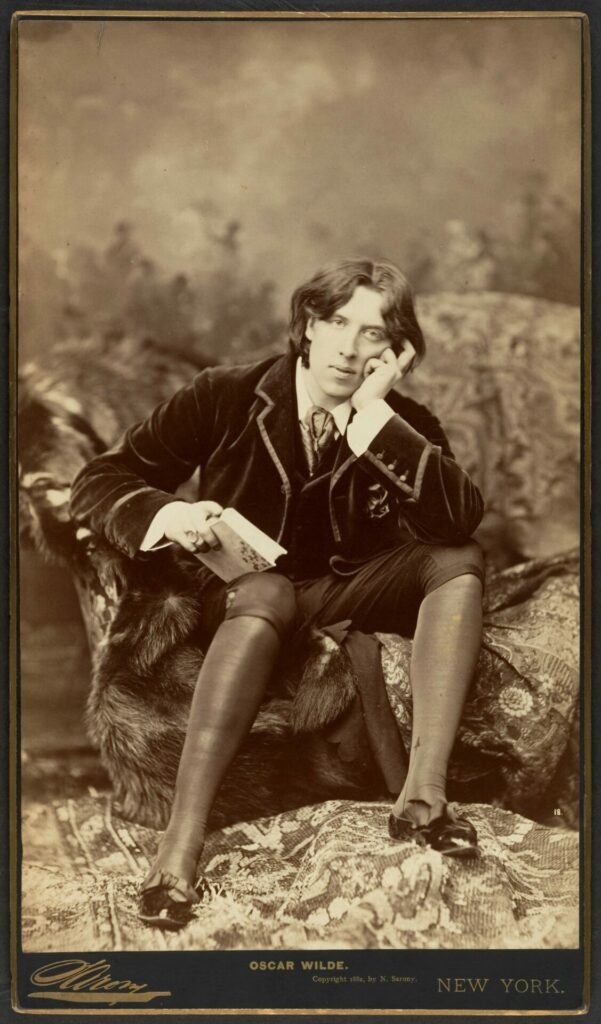
We need to grapple with fundamental questions that AI brings into focus. Like, how do we define authorship when AI tools become part of an artist’s toolkit? Should AI-generated works be explicitly labeled as such, and if so, at what point in the creative process does AI involvement become significant enough to require disclosure? We may need new frameworks that go beyond the simple binary of “human-made” or “AI-generated” to reflect the reality of how these technologies are being used–often as part of a complex creative process that involves both human and machine contributions. The history of art shows us that new technologies, from the camera obscura to photography to digital editing, have prompted similar soul-searching about authenticity and artistry. Yet rather than diminishing human creativity, these tools have expanded the possibilities for artistic expression. A key may be to focus less on whether AI can make “real” art and more on how we can thoughtfully integrate these new and provocative creative tools while ensuring fair compensation and credit for human artists whose work and styles have been used to train AI systems. As current lawsuits and debates around copyright and AI training data demonstrate, these aren’t just philosophical questions – they have real implications for artists’ livelihoods and the future of creative professions.
AI tools that create various forms of media have expanded markedly since last year. We’ve listed a few below but there are many other options out there that might better align to your views.
Or, if this is already feeling bad, go on to the Nope! options.
Images
Audio
There are limited free accounts for all three of these.
Video
Nearly every tool allows you to see “recently created” media. This will let you see what people are creating and usually lets you see the prompts that they are using to create that media. Take a look around. See how closely prompts are aligning with the product.
Come up with a prompt that will create what you want but make it as succinct as possible. Generate.
Now let’s take it to the other extreme. Add all the details. Be as specific as possible. Be flowery. Be poetic. If you need help, you can use AI to help you build it out.
Generate.
You now have two prompts at either end of the spectrum and at least two different products. Compare them.
How much difference did the prompting make? How well did the tool follow your directions?
Think about this experience and compare it to media creation experiences you’ve had that didn’t involve AI.
Use the form button below to share your prompts, products, and reflection.
Find out if your site or other content has been used in AI training.
Consider taking a more aggressive stance on any images you do upload to the Internet.