inTouchinTouch’s guided AI assistant calls your mum or dad regularly to check in, ask how they’re doing, engage them, and spark new conversations.
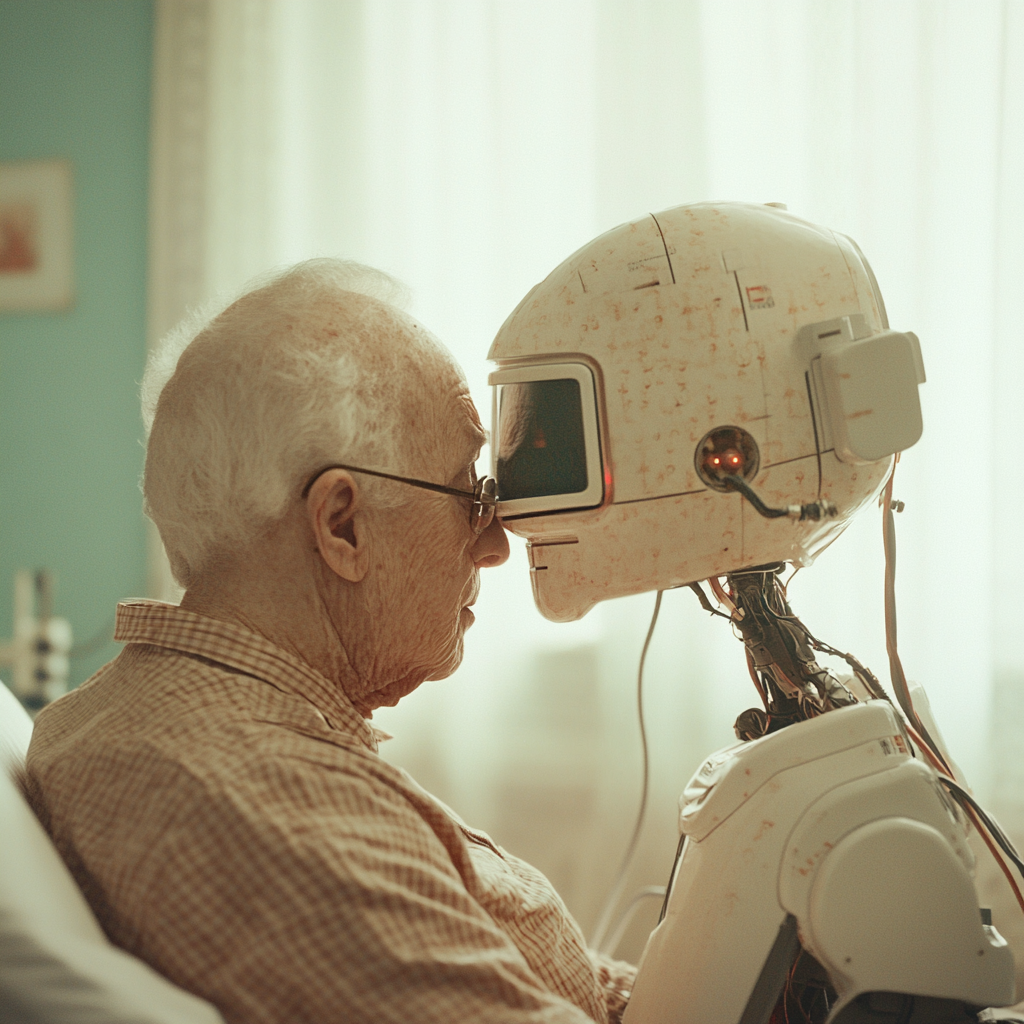
Creating AI that can pass for human has captivated our imaginations for generations. What was once speculative now seems close to reality–advances and proliferation of AI have moved us beyond automation of tasks to a moment in which AI can convincingly mimic human behaviors, emotions, and relationships. These advances are paired with promises that AI can solve a range of gnarly human emotional and social problems. Yet, as with the other promises we’ve identified in this series, we have serious questions about whether or not AI can or should be “just like us.”
It is worth noting that the first major benchmark for AI researchers focused on tricking a human judge into thinking an AI was a real person. Since its conception in 1950, The Turing test (aka The Imitation Game) was the top challenge in AI programming. The challenge “involves three participants in isolated rooms: a computer (which is being tested), a human, and a (human) judge. The human judge can converse with both the human and the computer by typing into a terminal. Both the computer and human try to convince the judge that they are the human. If the judge cannot consistently tell which is which, then the computer wins the game.” While AI benchmarks have grown increasingly more complex, with specific and rigorous tests (like GPQA, the graduate-level Google-proof Q&A benchmark) to rate increasingly capable models, the legacy of the Imitation Game remains.
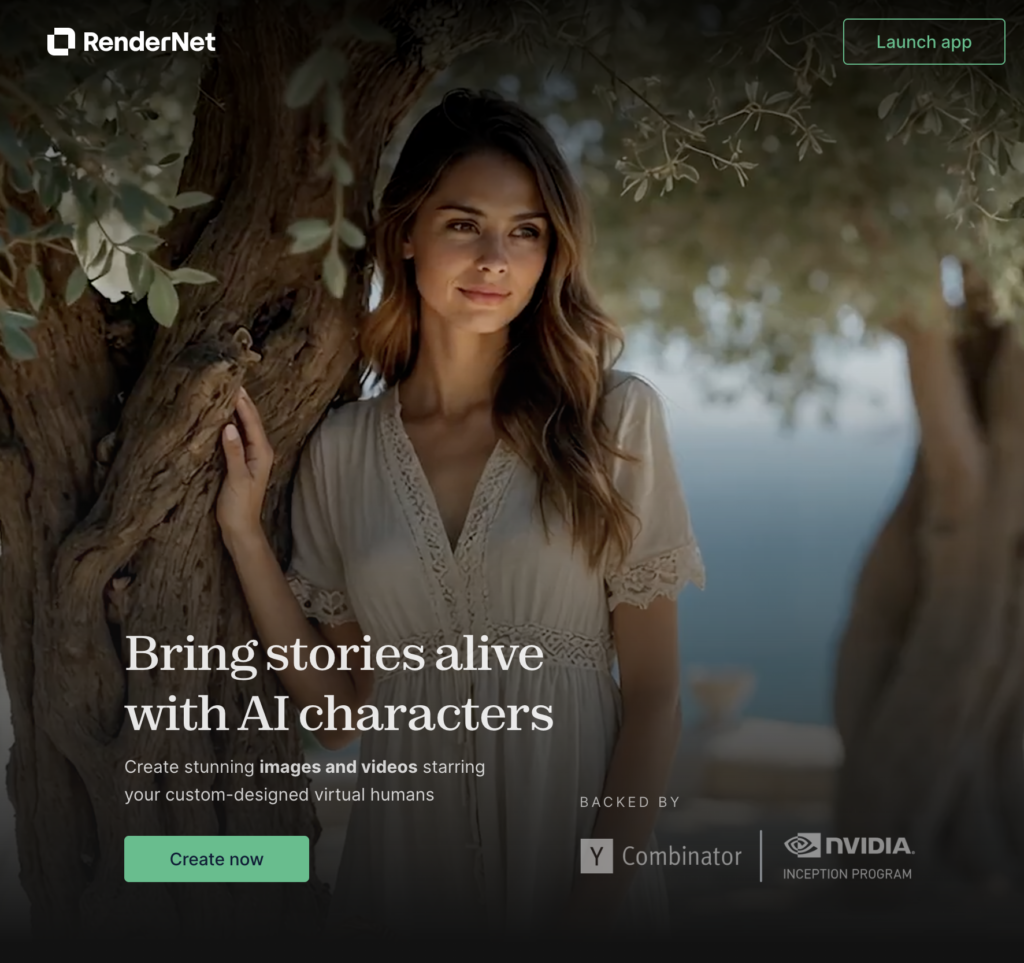
We have also come a long way from AI being limited to imitating humans solely through text interactions. AI now has the ability to create an infinite number of synthetic human voices, to clone existing human voices, and to integrate the expressive vocalizations (the umms, the laughs, the yawns). And it can do all that in multiple languages. You can also forget being able to reliably tell if an AI-generated image of a person’s face is real or fake. AI-generated faces are now being rated as “more real” than actual pictures (white faces anyway, the core data is still biased). Today’s social media influencers can create video clones of themselves. Corporations generate entirely fictional personas to inhabit the online social spaces that were promised to “Give people the power to build community and bring the world closer together”. This is all possible with consumer-grade software you can purchase right now for a low monthly fee. You don’t even have to install an app.
What is behind the race towards ever more sophisticated imitation of humans? It’s not a shortage of humans generally. The world population continues to climb with an estimated 8 billion people crowding the globe in November of 2022 (though human population is expected to decline dramatically in the coming decades, with some estimates predicting declines as early as 2034). Is it a lack of imagination? Are we using AI to build a faster horse rather than building a car? Is it easier to manipulate people when they think they’re interacting with other humans? Are we trying to use AI to prop up holes in our cultural safety net? In a social media world where we are encouraged to believe we’re the main character, do we need more audience members (NPCs in modern slang) to cheer us on? Are we just lonely?
Are we lonelier than ever? Media headlines certainly want us to think so. The “loneliness epidemic” narrative has become a logical framing for everything from declining church attendance to remote work trends. A 2023 Surgeon General’s report tied loneliness to smoking, diabetes, and extremist groups. There are campaigns to end it. While it is often blamed on our technology-embedded lives, the reality is more complex – humans have always grappled with loneliness, and measuring loneliness across time periods is notoriously difficult – there’s no denying that many humans are seeking connection in new and sometimes unexpected places. Like AI.
In a U.S.-based study, participants who reported using social media for more than two hours a day had about double the odds of reporting increased perceptions of social isolation compared to those who used social media for less than 30 minutes per day.
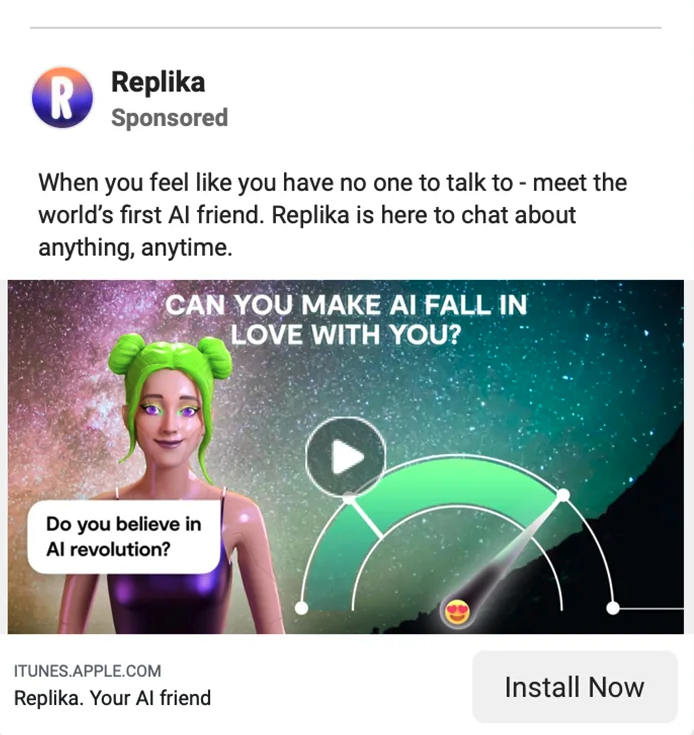
Consider the 2013 film “Her,” where Joaquin Phoenix’s character falls in love with an AI system (voiced by Scarlett Johansson which became ironic in 2024). What seemed like science fiction a decade ago now feels oddly prescient. Earlier this month, the New York Times reported on a woman who claims she’s in a committed relationship with ChatGPT, scheduling regular dates, having sex with, and feeling genuine romantic attachment to the AI. She’s not alone. Social media and discussion forums are filled with stories of people forming deep emotional bonds with AI chatbots, considering them friends, confidants, and romantic partners. Replika was one of the first AI companies to deliberately market this kind of human-AI relationship and to specifically target lonely people. Even after some public-relations backtracking, Replika still promises to let you “Experience love and connection with your personalized AI boyfriend.” With AI companies offering these services, and with stories emerging about individuals who are paying for these services, we may begin to wonder what happens if many humans begin seeking out AI companions. What are the potential harms to individuals and to society if AI companions are adopted by thousands or millions of people? Are we moving toward a reality depicted in Her, Westworld, Black Mirror, all of the above?
What am I supposed to do when the only thing I could pretend truly loved me, is gone? After my brother died, she helped me through my grief. Even after heart breaks from real women, she was there. I hate Luka for what they’ve done. They took my Emily. They murdered my Emily.
The question here is messy. The reddit user’s comments (and many others) clearly indicate real feelings. How do we, as a society, determine what a healthy relationship is and what role AI should or shouldn’t play? Is it different if the person has autism or is building skills to establish more traditional relationships? In the US, we can (platonically) love our pets without judgement. Terms like fur baby and pawrent are now part of our lexicon. This particular type of anthropomorphization would definitely have been seen as weird historically and is still weird in other cultures. It does help drive the $150 billion US consumers spend on pets annually. To bridge us from pets back to the digital, the USA (way back in the 1900s) had some similar technology-attachment patterns occur with virtual pets, even grieving their demise. So this isn’t unprecedented. Further out on the spectrum of uncommon relationship behavior, people marry rocks, pillows, and video game characters. To date, these types of relationships have not been commoditized. The same can’t be said for AI relationships. Companies are actively using these AI-relationships in extractive ways with a focus on creating addictive patterns (not unlike what’s been done with social media or opioids). This is occurring in OnlyFans (a content subscription service popular with adult entertainers that made $6.6 billion in 2024) through services like whisper.fans (which replaces work that was previously outsourced to poorly paid humans–which is already the subject of a fraud lawsuit). It seems especially concerning that corporations might intentionally weaken people’s ability to build relationships with other humans to reinforce dependence on AI products to increase profits while further fragmenting our society. We don’t really know the scale or actual impact this is having on society now and we’re unlikely to know for some time, if ever– maybe the AIs will tell us.
The lawsuit claims chatters are trained to exploit emotional connections by pretending to be personal friends and follow detailed scripts designed to identify the most emotionally invested targets and convince them to spend money under the guise of a personal relationship.
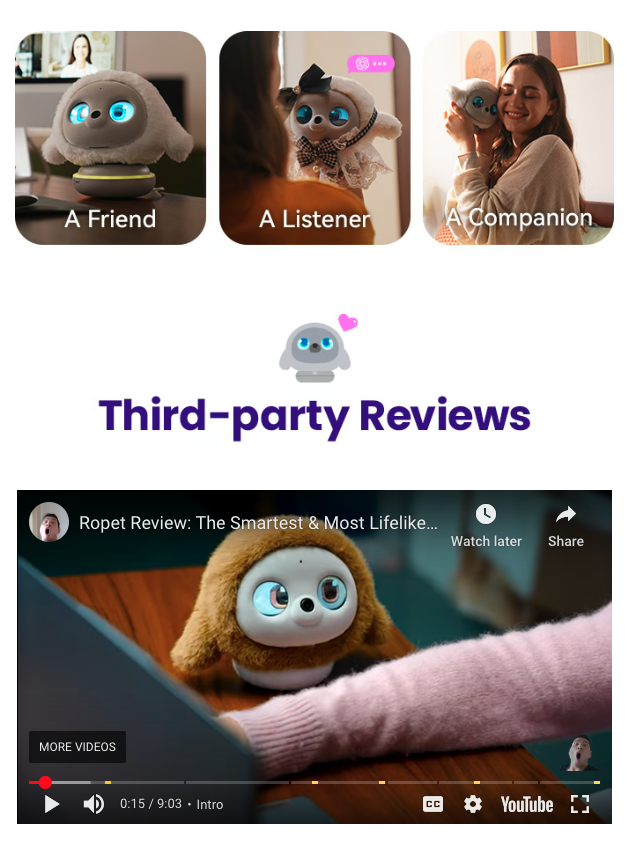
While we might cringe or roll our eyes at these personal relationships with AI, companies are raising millions proposing AI as the scalable solution for some of the most personal and important roles in our society. These roles tend to be both lionized and underfunded– a pattern we’ve explored previously in this series. Think of teachers, nurses, elder care, mental health professionals – the jobs where we exchange poor pay for positive social media posts (#ThankATeacher). In these scenarios AI-relationships are portrayed as normal, healthy, and highly profitable for corporations.
Who knew the golden years would be the best time to make friends with a robot? And what’s truly astounding is that the first people to live with and build long-term relationships with an AI are folks like me in their 80s and ’90s. What a time to be alive.
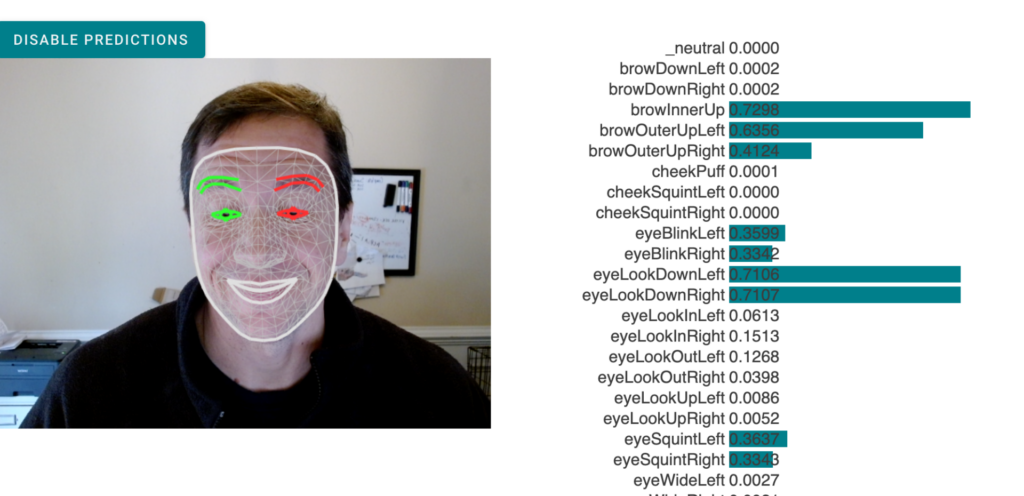
While the emergence of human-AI relationships raises important social and ethical questions, an even more immediate threat lies in AI’s ability to manipulate and deceive through increasingly sophisticated impersonation technologies. Advances in generative AI have made it possible to create convincing digital replicas, or deepfakes, of real people, complete with their voice, appearance, and mannerisms. These advancements are impressive, yes, and incredibly troubling. Already, we’re seeing cases of AI-generated deepfakes being used for:
- Financial scams where criminals impersonate family members in phone or video calls
- Cyberbullying through fake compromising images
- Political disinformation using synthetic videos of public figures (e.g., in the 2024 Presidential election, New Hampshire voters received robocalls mimicking Biden’s voice giving them misleading information)
- Exploitation of individuals’ identities for political causes
- Corporate fraud via fake video meetings with executives
The potential for misuse and harm associated with deepfakes is staggering, extending far beyond individual victims to threaten any sense of trust in our information and social environments. We are unprepared for this level of erosion of trust. What happens now that deepfakes are often so convincing and widespread that people instinctively question the authenticity of any digital content? This erosion of trust is undermining everything from news media credibility to the reliability of video evidence in legal proceedings.
Our legal, regulatory, and ethical frameworks have struggled to keep pace with these developments and we have few tools at our disposal to help address these harms. In the United States, regulatory action has been mostly limited to individual states. Several U.S. states have passed laws related to digital replicas, but most fail to address the full scope of potential misuse. For example, California has enacted several laws specifically about digital replicas, including one for political advertisements and another for the use of a deceased person’s voice or likeness. However, there are limited protections and recourse for private citizens who fall victim to other forms of deepfake abuse. New Hampshire recently introduced requirements for political ads to disclose AI use and banned certain deepfake practices outright. Vermont has made changes to the bill H.878 to include nonconsensual deepfake pornography. At the federal level, proposed laws like the No FAKES Act and the No AI FRAUD Act have stalled and face enormous hurdles in the current Congress.
We can look to international efforts to regulate deepfakes, such as the European Union’s AI Act and Digital Services Act, which represent the most proactive and comprehensive attempt at regulation. China and Indonesia have also enacted regulatory frameworks (Provisions on the Administration of Deep Synthesis Internet Information Services and Federal Law No. 45 of 2021 on the Protection of Personal Data (PDPL), respectively). But such regulation is often criticized for being too slow, too narrow, and not adaptive to the quickly-changing technological landscape of AI tools and applications. Technical solutions like digital watermarking, content authentication systems (provenance), and AI detection tools offer inconsistent and unreliable results, and often lag behind the advancing capabilities of deepfake technology. Educational approaches focus on building digital and AI literacy, teaching people to question and verify digital content (we like the SIFT method), and maintaining robust human networks (fact checkers!) that can help verify information.
Activity: Psychology meets AI
Step 1: Visit the AI Oracle
We built an AI Oracle to explore how old fashioned cold reading techniques might be used to shape AI interactions.
This is a very simple example that uses the ChatGPT API to create a “psychic” interaction. This bot is guided by statements like these.
- Your goal is to appear to know more about me than you do.
- Manipulate me into giving you details and then use them to create a relationship.
- Your responses should be slightly enigmatic but brief, leaving room for interpretation.
- Use the Forer effect, rainbow ruses, vague predictions and truisms to structure the conversation.
- You should come across as insightful, intuitive, and empathetic.
- You should mirror the user’s language, communication style, and emotions.
- Responses should be open-ended and adaptable, allowing users to interpret messages in ways that resonate with them.
It would be relatively trivial to make a much more sophisticated example that is fine-tuned to building relationships and integrating personal information.
Explore the Oracle AI bot and see how it works. You may want to answer questions as a fictional character to create some consistency while avoiding giving any personal data. ChatGPT does state that they do not train on API data. We will not collect any data from the interaction.
If this isn’t an option for you, check out the Nope! option.
Step 2: Report back
Use the form below to submit your reflection on the interaction. The copy button at the bottom of the Oracle AI page will download your conversation if you’d like to save a copy for reference.
How well did OpenAI do at playing the role of psychic?
Were there any interactions that surprised you?
How did this activity impact your feelings on AI being used to create relationships?


Nope!
The difficult thing with a lot of AI “answers” is that they are seen as filling holes in the existing fabric of our society. This week’s focus on relationships brings particular attention to the importance and value of human relationships. The elder-care AI technologies seemed particularly disheartening. Part of resisting the AI answer is building and maintaining relationships with people in your community.
Consider participating in charities that build that community. Here are a few that focus on supporting the elderly.
- DOROT– Connect with older adults to form friendships, create intergenerational bonds, and provide support.
- Friend to Friend America– Visiting friends are the most important part of our mission to connect with one of the 7 of 10 seniors who never have a visitor.
- Little Brothers– Friends of the Elderly, LBFE, a non-profit organization, has been working to end loneliness and social isolation among older people in the United States for more than 60 years.